


Many young Chinese continue to struggle to find work amid intense competition and the post-pandemic malaise in the country.
According to the Chinese Statistics Bureau’s figures for July, 17.1 percent of those aged 16 to 24 are unemployed, a 3.9 percent jump since June and the highest rate since the country resumed its updates on the politically sensitive metric earlier this year.
Beijing abruptly stopped these reports until December 2023 after posting a whopping 21.3 percent youth unemployment rate in June of that year. Under the new methodology—which notably excludes students, rural unemployed and those who have given up looking for a job— the figure has remained slightly lower but still in double digits.
In recent years, Chinese President Xi Jinping’s regulatory crackdown on Big Tech and after-school tutoring companies, both industries that relied heavily on fresh graduates, have worsened job prospects for those entering the workforce.


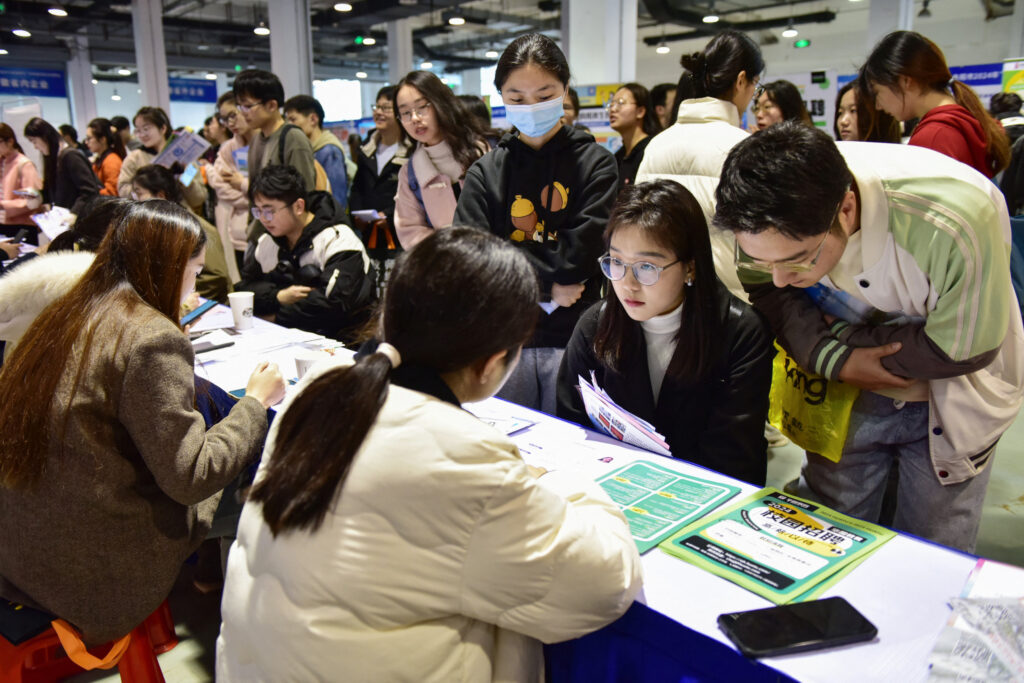
University students attend a job fair in Fuyang, in eastern China’s Anhui province on March 24, 2024. China’s youth unemployment figure for July was 17.1 percent, the highest so far this year.
AFP via Getty Images
Xi in May said boosting youth employment should be a “top priority” for the country.
The nearly 12 million college students who graduated in June have only further intensified competition.
China’s disillusioned Gen Zers have popularized the term “rotten-tail kids” on Chinese social media. “Rotten tail” (lan wei) is slang for something started and not properly finished, such as the millions of homes purchased but for years sitting unfinished by over-leveraged property developers that sparked the country’s ongoing real estate downturn.

The overall unemployment rate cited by the Chinese Statistics Bureau was 5.2 percent, a 0.2 percentage point increase from June.
Chinese state-owned media agency the Global Times called the country’s employment situation “largely stable,” citing growth in high-tech industries and the service sector. The outlet attributed the youth unemployment number to a “seasonal increase” caused by the flood of newly graduated students into the labor force.
Unemployment among Chinese aged 25 to 29 was reported to be 6.5 percent in July following June’s 6.4 percent and May’s 6.6 percent. Joblessness was lowest in the 30 to 59 cohort at 3.9 percent, with the figure for this group hovering around the 4 percent mark since the reports resumed in December.
The Chinese embassy in the U.S. did not immediately respond to a written request for comment.
Younger Chinese citizens’ struggle to find work comes amid tepid consumer spending, one of the factors weighing on the world’s second-largest economy.
Since this demographic is also the most likely to spend, putting money in their hands would be an effective form of economic stimulus, in a country that continues to grapple with low consumer confidence, Steve Tsang, director of SOAS University of London’s China Institute, previously told Newsweek.
👇Follow more 👇
👉 bdphone.com
👉 ultraactivation.com
👉 trainingreferral.com
👉 shaplafood.com
👉 bangladeshi.help
👉 www.forexdhaka.com
👉 uncommunication.com
👉 ultra-sim.com
👉 forexdhaka.com
👉 ultrafxfund.com
👉 ultractivation.com
👉 bdphoneonline.com