


Few will doubt that 2025 has earned a notable place in the history books of the future. There are far too many moments of significance to attempt to summarize here (I refer you, for a quick refresher, to the opening of Phil Buchanan’s recent post on this blog); I propose, instead, to review the year through the lens of the commentary, insights, and calls to action that took shape on the CEP blog this year, month by month.
We strive, on the blog, to present a diversity of views on the most pressing topics in philanthropy and to share valuable insight on the issues of the day as they pertain to philanthropic practice, be they fresh takes on perennial conversations that have been taking place in our sector for decades or brand-new developments promising to shake the ground on which we stand.
With that in mind, I offer this look back at (some of) the best of the CEP blog in 2025 — only you, our readers, can be the judge of whether we approached that above-stated goal. I always welcome your constructive feedback, and hope that you will consider this your forum for discussion, your arena for ideas about philanthropic effectiveness, your Speaker’s Corner to state your case.


Alarmed by developments and anticipating the coming shift in the winds for the nonprofit sector, CEP’s Buchanan opened the year with a call to donors — and would-be donors — urging them to see the invaluable work that community organizations do and to back them in the face of decreasing giving, increasing burnout, and growing threats from government action.
What’s a funder to do in a crisis? Melinda Tuan and Britt Lake offer a pragmatic first step: turn on your headlights — by which they mean “listen.” Listen to what your nonprofit partners need, what the communities you are serving need, and how you can best help them. Noting the need to act quickly but urging funders not to skip listening lest they miss key opportunities, they offer resources and guidance on creating rapid feedback loops.



The challenges brought on by the current presidential administration’s actions represent not an isolated crisis, says Lior Ipp, but “part of a larger, complex web of issues.” Philanthropy, he says, must respond with a fundamental shift in its thinking and approaches, not incremental changes. He offers three distinct opportunities for moving into a 21st century approach to philanthropy.
Kicking off a series that aims to widen the aperture on fundamental ways of doing, thinking and being for philanthropy, Mandy van Deven sets the stage in this piece for a collaborative exploration of the “dominant narratives that underpin common practices in the sector” and the “interventions we can all make to reduce harm, redistribute power, and redesign philanthropy.”



CEP’s third annual State of Nonprofits report held a dubious distinction: the highest response rate to a CEP survey in a decade. “This tells you something about the urgency of the moment,” noted CEP’s Elisha Smith Arrillaga, Ph.D., who led the research and who, in this post, shares some of the sobering headline data in conversation with Buchanan.
“When we speak up to defend our values, values that I would argue define our country, it helps give others the confidence to stand up for their beliefs.” So says John Palfrey, responding to stark data from CEP on the State of Nonprofits and encouraging funders to act quickly and with trust where they can, while acknowledging some hard truths.



Alongside CEP’s Smith Arrillaga, members of the Aspen Forum for Community Solutions team offer two key lessons from a decade of supporting place-based philanthropic efforts about what it means to listen well and meaningfully incorporate community feedback into the work.
“Nonprofit organizations are in a state of crisis.” A group of six foundation leaders representing regional, national, and international funders with various areas of focus lay bare the stark state of the sector and, importantly, offer a list of five effective actions funders can take to “meet the moment.”



When key sources of data begin to become unreliable, are inexplicably altered, or even disappear altogether, “it becomes harder to answer basic questions that underpin effective grantmaking,” notes Karuna Sridharan Chibber. Following a listening tour with field experts, data scientists, and researchers, she offers a framework of action for funders to preserve, maintain, and rebuild the public data infrastructure that benefits the whole field.
Many have made the case that AI is a powerful tool to amplify productivity, arguing that it could save nonprofits time, energy, and resources. But what are the limitations of that viewpoint, or even the risks of an over-reliance on AI purely as an efficiency booster? Albert Chen addresses these questions and offers a different vision for AI in the social sector: as a tool to expand the possibilities of the work and amplify impact, not just productivity.



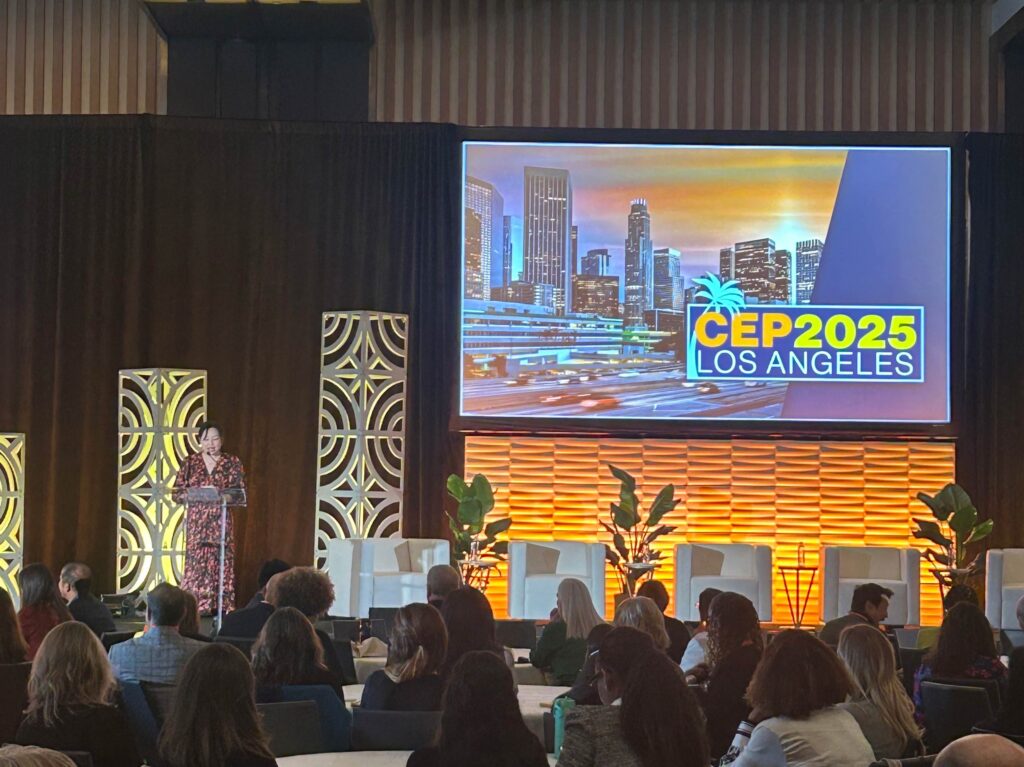
Early November saw a pivotal gathering of philanthropic leaders in L.A. for CEP’s conference. To set the stage (pardon the pun) for three days of learning, discussion, and lively exchange, CEP’s Smith Arrillaga debuted new data on how nonprofits are experiencing the current context and how their funders are responding.
“This is where we are; America in 2025.” Buchanan brings us full circle on the blog with a message for philanthropy and a call to action for the giving season and the coming year. A long-time advocate of the incalculable value of nonprofits in society, he paints a stark but hopeful picture about the role that funders can and must play in defending and supporting the sector in the face of unprecedented attacks.


Honorable Mentions
Given the option, I’d probably feature every post on the blog this year. But barring that possibility, and in case you missed them at the time of their publication, these posts should be on your radar, too, and also tell vital pieces of the story of this year:
2026 promises to be as eventful a year as this one. At CEP we will continue to aim, through our research, our assessment tools, and right here on the blog to be a valuable source of learning and insight to you.
Chloe Heskett is senior editor, writer, and content strategist on the Programming and External Relations team at CEP. Find her on LinkedIn.
Editor’s Note: CEP publishes a range of perspectives. The views expressed here are those of the authors, not necessarily those of CEP.
👇Follow more 👇
👉 bdphone.com
👉 ultractivation.com
👉 trainingreferral.com
👉 shaplafood.com
👉 bangladeshi.help
👉 www.forexdhaka.com
👉 uncommunication.com
👉 ultra-sim.com
👉 forexdhaka.com
👉 ultrafxfund.com
👉 bdphoneonline.com
👉 dailyadvice.us