


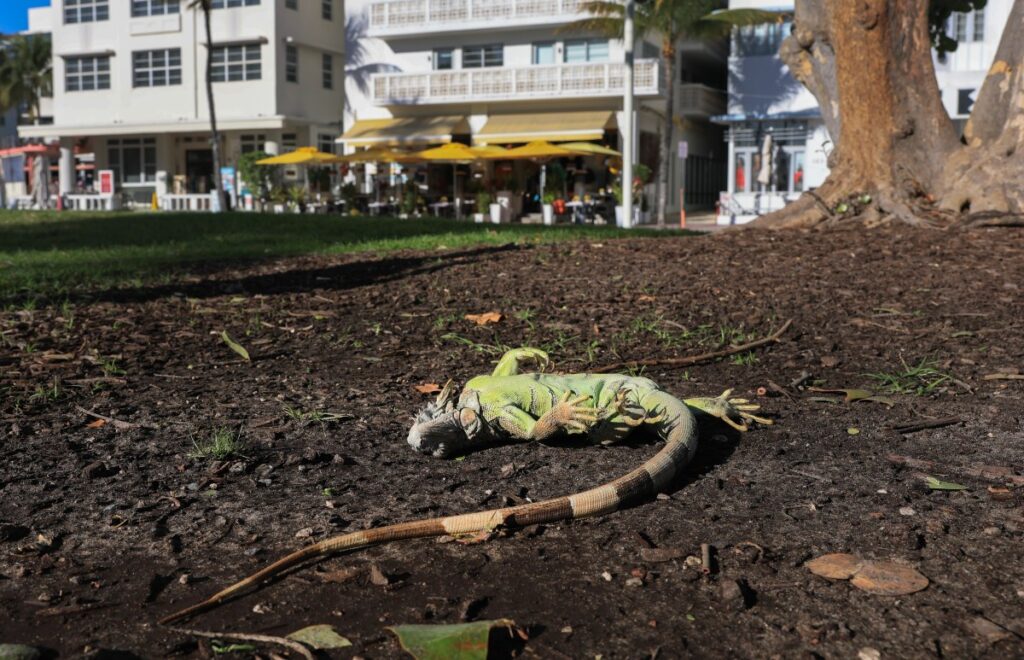
A sharp cold snap sweeping across Florida has brought with it one of the state’s most unusual winter sights: iguanas dropping from trees as temperatures plunge well below their comfort zone.
The phenomenon, which tends to resurface whenever Arctic air pushes deep into the peninsula, has once again captured attention as residents woke to frigid mornings and immobilized reptiles scattered on sidewalks, lawns and roads.
As a strong cold front moved through the state late Thursday into Friday, overnight lows dipped into the 20s across North Florida and the 30s in parts of Central Florida.
Even South Florida, where winters are typically mild, saw temperatures fall into the low-to-mid 40s, with Miami forecast to hit 47 degrees and West Palm Beach expected to reach 42. Those conditions are cold enough to trigger “cold-stunning” in green iguanas, an invasive species common in the southern half of the state.
“Green iguanas are sensitive to the cold and can become stunned when temperatures fall into the 40s and 30s,” according to AccuWeather meteorologist Brandon Buckingham.

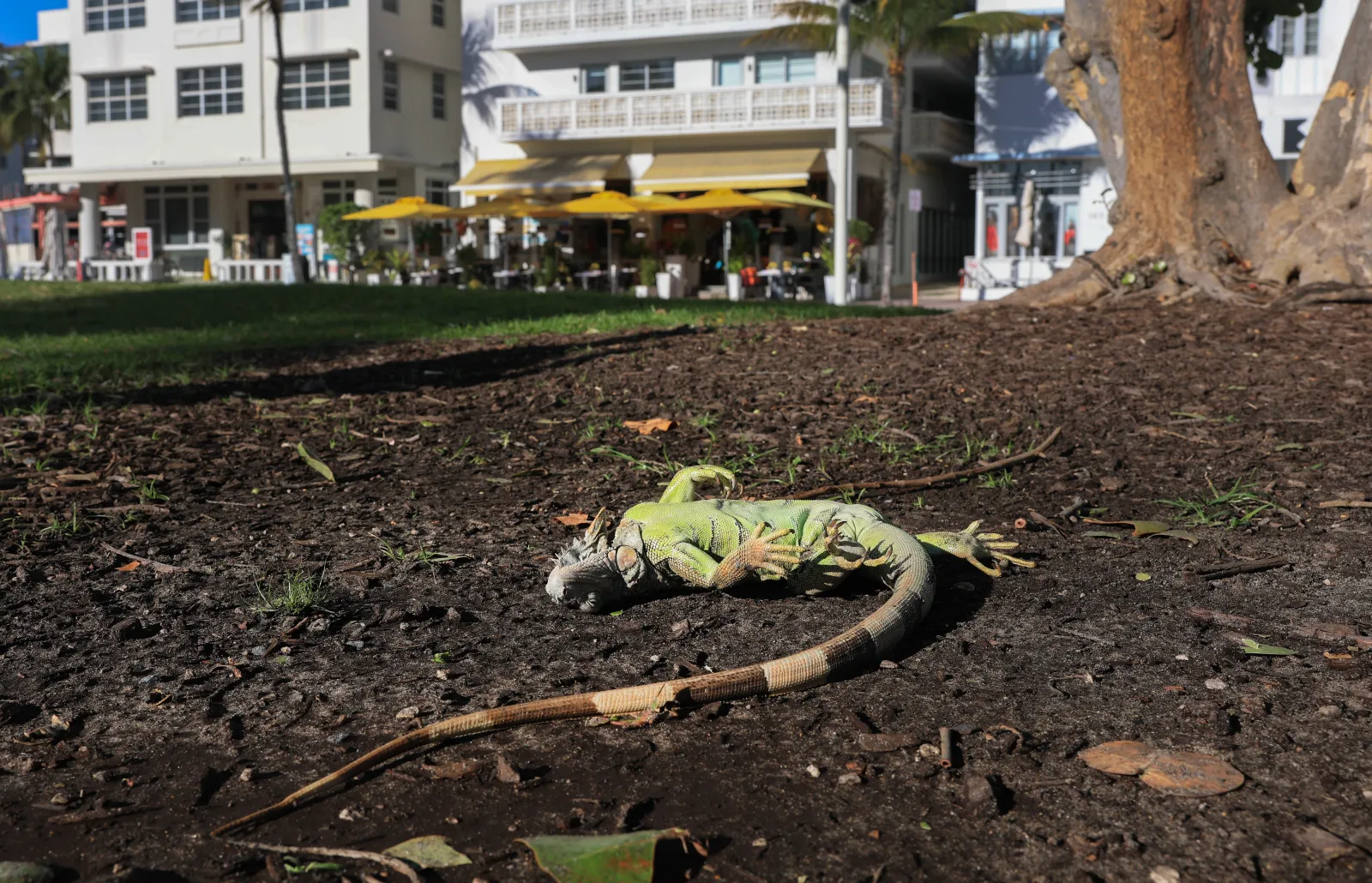
“When that happens, they may lose their grip and fall from the trees. It’s a unique cold-weather hazard in Florida,” Buckingham continued.
Because iguanas are cold-blooded, their bodies slow dramatically when temperatures drop below about 50 degrees. Below that threshold, they can lose muscle control and appear lifeless after tumbling from branches.
Experts stress that the animals are often not dead. Once temperatures climb back into the 50s, many regain mobility and move away on their own.
“When it gets cold like this, it’s funny to those who aren’t from here to see the news people talking about iguanas falling from trees, but it can and will happen,” said Joe Wasilewski, a conservation biologist and member of the International Union for Conservation of Nature’s Iguana Specialist Group.
The freeze was part of a broader Arctic outbreak that delivered record-setting cold, rare snow flurries and widespread agricultural impacts across the state.
According to AccuWeather, this event ranks among the coldest Florida has experienced in decades, with temperatures falling far below seasonal averages and prompting hard freeze warnings.
Expert Advice
The Florida Fish and Wildlife Conservation Commission (FWC) has repeatedly advised residents not to handle cold-stunned iguanas. Moving them can be dangerous, both for people and the animals, particularly as they may revive suddenly.
Following the cold outbreak, the FWC briefly allowed the public to bring cold-stunned iguanas to designated offices. This offered residents an opportunity to dispose of the species, which is invasive in the area, in a human fashion.
However, for those still hoping to clear frozen iguanas from their property, the emergency authorization has since expired.
“After a rare cold snap left green iguanas literally falling from trees across South Florida, the Florida Fish and Wildlife Conservation Commission announced on Tuesday it is no longer accepting the cold-stunned reptiles at its offices,” CBS12 reported.
While the sight of large lizards—some stretching up to five feet long—lying motionless can be startling, experts say the best response is patience.
As Florida warms back up in the coming days, most of the fallen iguanas are expected to recover, offering a reminder that even in the Sunshine State, winter can still deliver some truly strange surprises.
To read how Newsweek uses AI as a newsroom tool, click here.
👇Follow more 👇
👉 bdphone.com
👉 ultractivation.com
👉 trainingreferral.com
👉 shaplafood.com
👉 bangladeshi.help
👉 www.forexdhaka.com
👉 uncommunication.com
👉 ultra-sim.com
👉 forexdhaka.com
👉 ultrafxfund.com
👉 bdphoneonline.com
👉 dailyadvice.us