


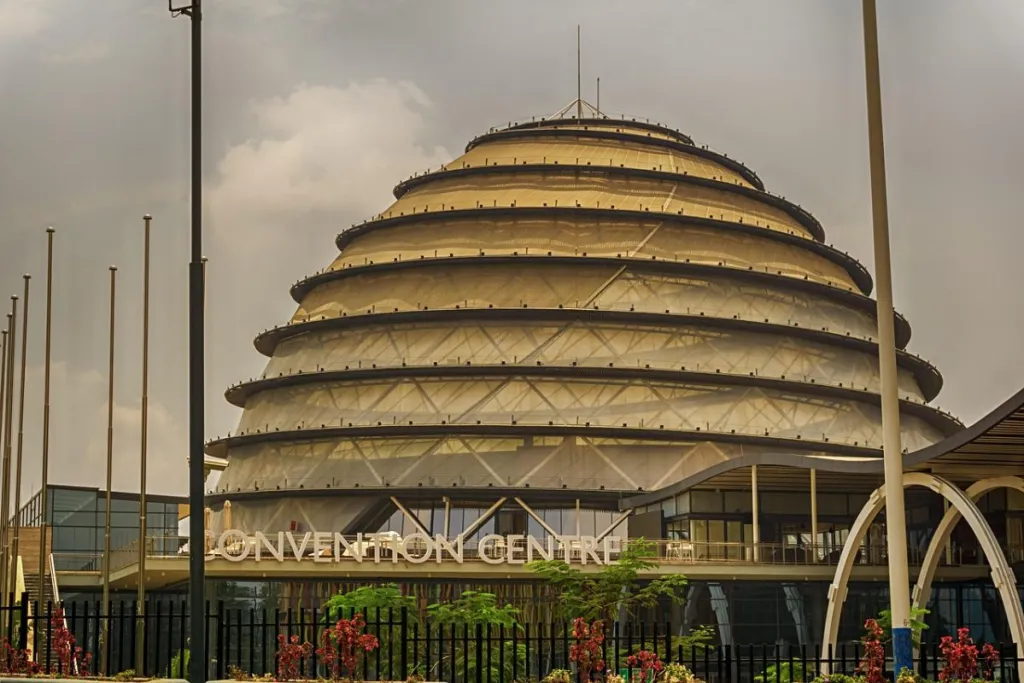


ICCA’s decision to bring its 2027 Congress to Kigali marks a major moment for Rwanda’s fast-growing meetings sector — and it has also prompted some industry discussion about LGBTQ inclusion as planners look ahead to the event.
For Rwanda, the selection by the International Congress and Convention Association is both symbolic and strategic.
“A lot of people still don’t know where Rwanda is or have an image of the country that isn’t accurate,” said Janet Karemera, CEO of the Rwanda Convention Bureau (RCB).
The bureau’s goal, said Karemera, is to double MICE revenues within five years.
Rwanda has climbed from 21st to third in ICCA Africa country rankings. Kigali now ranks second among African cities for international association meetings, behind Cape Town.
Over the past decade, Rwanda has invested heavily in its business events infrastructure, including the Kigali Convention Centre, expanded hotel inventory, and sports facilities designed to host international events.
Accessibility is central to Rwanda’s pitch. The country offers free visas on arrival for all nationalities.
For ICCA, the move signals continued geographic expansion into emerging markets as association growth accelerates across Africa and the Middle East.
Inclusion Concerns
ICCA’s decision to meet in Rwanda has prompted discussion within parts of the global meetings community about LGBTQ inclusion and protections.
Same-sex relations are legal in Rwanda, but human rights groups have cited ongoing social stigma and reports of discrimination against LGBTQ individuals.
Karemera said “everyone’s welcome” in Rwanda. She cited the country’s track record of hosting international gatherings, including the Women Deliver Conference in 2023, which focused on gender equality and women’s health and rights. Last year, Rwanda hosted the International AIDS Conference, she said.
The LGBT Meeting Professionals Association (LGBT MPA) responded to the Kigali announcement by raising concerns about safety and equal access.
“Our first reaction was how we ensure LGBTQ+ event professionals can attend, learn, network, and represent their organizations equally and without fear,” said Cameron Curtis, CEO of LGBT MPA. “That concern is especially real for transgender and gender diverse professionals, who often face a different level of personal risk when traveling.”
Curtis said the decision represents both opportunity and risk.
“It can be both, depending on how it is handled,” she said.
While international events can foster visibility and dialogue, “we should not assume an event automatically improves lived experience, and it should never place local or visiting professionals in a more vulnerable position.”
Curtis called for human rights due diligence comparable to security and health planning, with inclusion embedded from the outset.
“True inclusivity means professionals can participate openly and professionally without fear of negative consequences, not simply that a law exists on paper,” Curtis said.
LGBT MPA also issued a public call to action on event safety following the announcement.
Opportunity or Risk?
Rory Archibald, senior business events manager at VisitScotland Business Events, said inclusion is personally important to him as a member of the LGBTQ community.
He said the 2027 ICCA Congress could serve as a platform for engagement.
“I think there’s a real opportunity to create something special that would become a benchmark of how we do public outreach and how we engage local authorities and local governments to really create change,” he said.
At the same time, he acknowledged social stigma remains a concern.
“When we look at Rwanda, the LGBTQ community is not criminalized, but there are stigmas within society. There’s evidence of police violence against LGBTQ community members,” Archibald said.
He cautioned that advocacy efforts must avoid placing local communities or visiting professionals at risk.
Cultural Issue
Gregg Talley, CEO of Talley Management Group, which works with U.S. and global associations and has operations in Africa, framed the debate as part of a broader industry question.
“This is a cultural issue across much of Africa, which correlates to deeply held values and frankly, in some countries, political scapegoating. Which, by the way, is also happening in some countries in the global north,” said Talley. “We have to be realistic. Are we only going to go to the most welcoming countries for the LGBTQ community? That makes no sense, as you’re then cutting off a whole bunch of the world.”
He questioned whether boycotts advance change. “Do you boycott? Who are you then hurting?” he said.
Talley challenged ICCA to use its presence constructively.
“What are you willing to do to support African gay and lesbians, whether it’s in our industry or in the community in general?” he said. “We only hurt our own industry, or in this case, all of Africa, by saying we’re not going to go. But how do we use this as an opportunity?”
A Broader Industry Shift
ICCA has also announced Muscat, Oman, as the host city for its 2028 Congress, underscoring the association’s continued expansion into destinations outside Western markets.
As global associations pursue growth in emerging regions, destination selection is increasingly intersecting with corporate DEI commitments and member expectations. Industry leaders say the debate around Kigali may serve as a case study in how organizations balance geographic diversification with inclusion considerations.
Karemera said she hopes delegates leave Kigali with a deeper understanding of Rwanda’s economic transformation and Africa’s expanding role in global business events.
👇Follow more 👇
👉 bdphone.com
👉 ultractivation.com
👉 trainingreferral.com
👉 shaplafood.com
👉 bangladeshi.help
👉 www.forexdhaka.com
👉 uncommunication.com
👉 ultra-sim.com
👉 forexdhaka.com
👉 ultrafxfund.com
👉 bdphoneonline.com
👉 dailyadvice.us