


Swedish mushroom foragers have been asked to aid researchers in their search to find out how much radioactive fallout remains in the country nearly 40 years after the Chernobyl nuclear explosion.
On April 26, 1986, there was a disaster at the then-Soviet power plant located in present-day northern Ukraine. An uncontrolled reaction during a routine test caused the roof of a reactor to blow off, releasing radioactive materials across Europe.
The explosion led to the confirmed deaths of 30 people in its immediate aftermath. The long-term death toll of people who may have died from radiation poisoning is unknown. However, a 2005 report from the United Nations found that up to 4,000 people could eventually die of radiation exposure from the disaster.
To see how much radioactive fallout still remains in Sweden, the Swedish Radiation Safety Authority has asked mushroom foragers to send in double-bagged edible fungi (at least 100 grams of fresh mushrooms or 20 grams of dried mushrooms) during the 2024 season’s harvest.


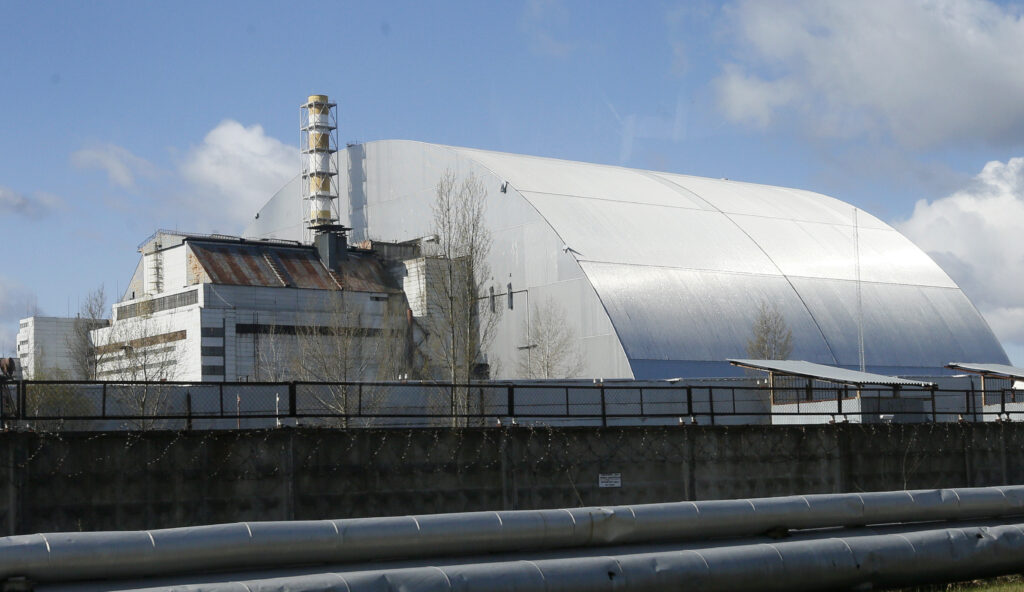
A shelter construction covers the exploded reactor at the Chernobyl nuclear plant, in Chernobyl, Ukraine, on April 27, 2021. Swedish mushroom foragers have been asked to aid researchers in their search to find out how much radioactive fallout remains in the country nearly 40 years after the Chernobyl nuclear explosion.
AP Photo/Efrem Lukatsky
Researchers will then look for the levels of Cesium-137 to see how much of this key radioactive material released in the 1986 fallout remains today. Cesium has a half-life of roughly 30 years. A half-life, in this context, is the time it takes for a radioactive material to lose one-half of its radiological activity.
Foragers will also be asked where they found their harvest, but to avoid hesitation from mushroom-pickers who may not want to disclose spots that regularly produce the coveted golden chanterelle mushroom, they don’t have to give away too many details.
“It doesn’t have to be the exact location of the most secret chanterelle spot,” Pål Andersson, an investigator at the Swedish Radiation Safety Authority, told The Associated Press.
Sweden was the first to detect the radioactive fallout of Chernobyl, which forced Soviet officials, who tried to cover up the disaster, to come clean days after the disaster. Hundreds of thousands of Soviets were sent to the plant to help clean it up in an effort to contain the fallout, often with inadequate protective gear.
As proof of the Chernobyl explosion’s lasting impact, the Czech Republic’s State Veterinary Administration said in 2017 that roughly half of all wild boars in the country’s southwest are radioactive and are considered unsafe to eat.
The Czech agency said the boars remain radioactive decades after the Chernobyl disaster because they eat an underground mushroom that absorbs radioactivity from the soil.
This article includes reporting from The Associated Press.
👇Follow more 👇
👉 bdphone.com
👉 ultraactivation.com
👉 trainingreferral.com
👉 shaplafood.com
👉 bangladeshi.help
👉 www.forexdhaka.com
👉 uncommunication.com
👉 ultra-sim.com
👉 forexdhaka.com
👉 ultrafxfund.com
👉 ultractivation.com
👉 bdphoneonline.com