
 By
By

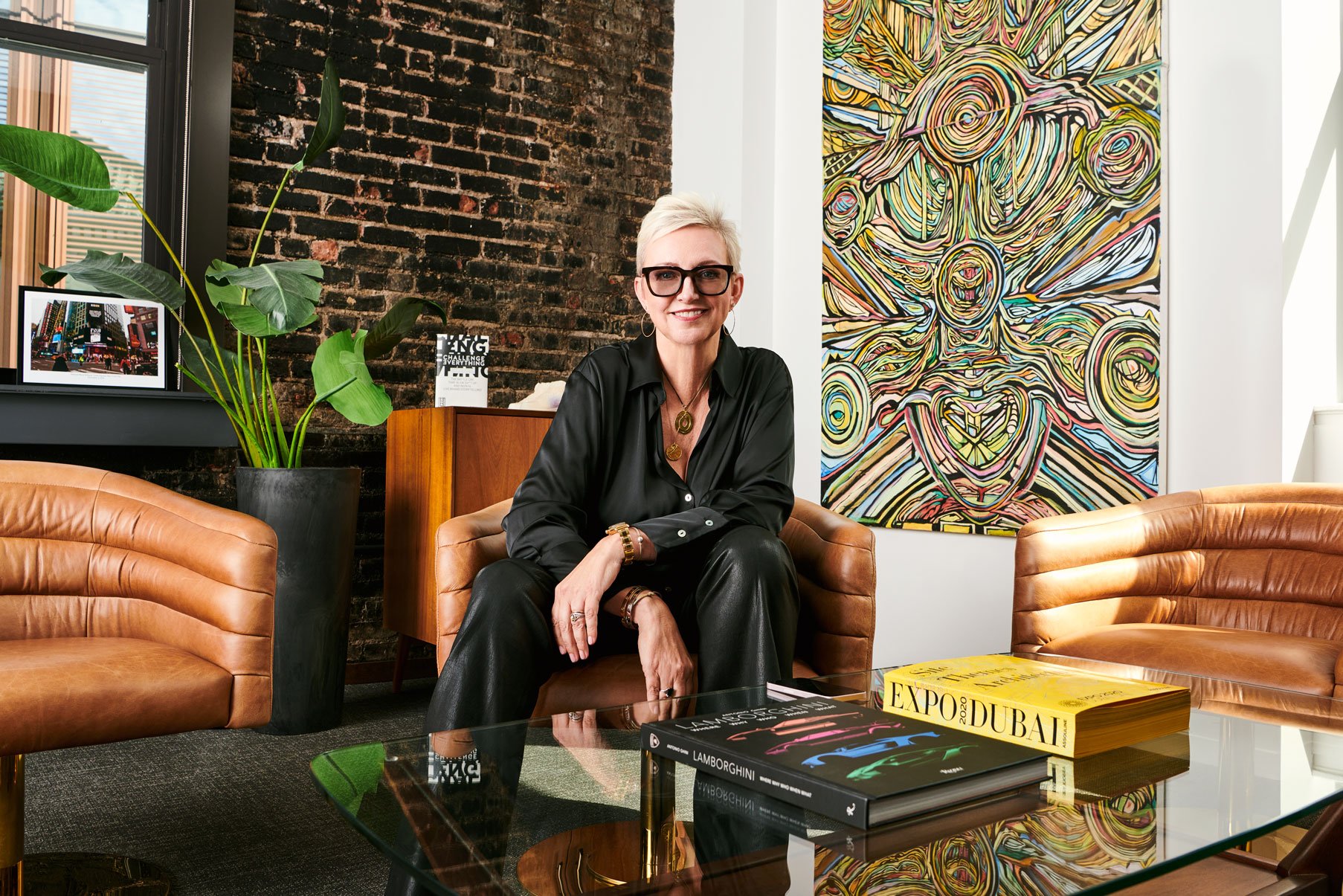
By Kristina McCoobery, CEO, INVNT
Technology has blurred the line between the physical and the digital. Extended reality, AI, and immersive media are no longer sci-fi concepts; they are everyday realities that make it increasingly difficult to distinguish where the screen ends and the real world begins. This erosion of reality is compounded by research from the MIT Media Lab (Science, 2018), which proved that false information spreads significantly faster online than the truth.
As billionaire Mark Cuban bluntly warned: “In an AI world, what you do is far more important than what you prompt”. Action and lived experience now carry infinitely more weight than synthetic output.
The Trust Deficit When reality feels inherently unstable, audiences aggressively crave authenticity. Live, in-person moments cut through digital ubiquity to become the ultimate trusted currency. The 2023 Edelman Trust Barometer reports a severe decline in trust across traditional media channels, with audiences placing their faith squarely in direct experiences and peer recommendations. Nielsen confirms this, noting that experiential engagement and word-of-mouth completely outperform digital ads in perceived credibility.
This is a structural, macroeconomic shift. The World Economic Forum notes that we have officially entered the “experience economy,” where experiences are actively replacing possessions as our primary source of value, identity, and connection. In an overpopulated world suffocating under infinite product access, 78% of millennials now choose to spend money on experiences over material goods—an economic reality that cuts across all age brackets and socioeconomic groups. Physical presence has become a premium commodity.
The ROI of Reality The psychology driving this shift is undeniable. Cornell University professors Thomas Gilovich and Amit Kumar found that experiential purchases generate enduring happiness because they integrate into our personal identity and foster deep social connection. The business case is equally robust: Forrester Research (2020) proved that brands delivering differentiated offline experiences drive stronger loyalty and a greater willingness to pay. The proof is in the spending: since 1987, consumer spending on live events has surged by 70% relative to overall US consumer spending.
While traditional retail models contract, companies designing compelling offline engagements are seeing massive returns compared to digital marketing alone. Digital content is omnipresent, but it is entirely ephemeral. Audiences are exhausted by the algorithm; Accenture Interactive’s Life Reimagined (2021) highlights a surging demand for purposeful, real-world brand interactions that slice through the digital clutter. Experiences are the new scarce social capital—they cannot be downloaded; they must be attended.
Experiential is the Anchor. The convergence of digital and physical does not threaten experiential marketing. It validates it. According to EventTrack (2022), 91% of consumers feel more positively about a brand after participating in an experiential activation, and 85% are more likely to make a purchase. Consider Netflix Sports Club in Australia, co-produced by INVNT, where more than 3,500 fans stepped out from behind their screens and into a fully immersive sporting universe. Across nine activations spanning four levels, live competition, trivia, meet and greets, and fan challenges turned passive viewers into active participants. Phones were no longer the destination. The experience was. In a world of infinite streaming, presence itself became the product.
In an AI-accelerated world, perfection is infinitely scalable. Presence is not. AI will always excel at targeting audiences and measuring impact, but it can never replicate the bass vibration of a live show, the collective energy of a reacting room, or the sheer electricity of anticipation.
When audiences can no longer tell what is real, the most valuable thing a brand can offer is something sensory, shared, and tangible. Experiential is not a marketing tactic. It is trust made physical.
And in an AI world, trust is the rarest currency of all.
Visit our website: https://invnt.com/
About Kristina McCoobery
Kristina McCoobery is a visionary leader in innovation-led brand experience, co-founding INVNT in 2008 at the height of the Great Recession and redefining live brand storytelling with a ‘Challenge Everything’ agency model. As CEO of INVNT, she leads a global powerhouse spanning 11 offices and over 200 employees, crafting history-making campaigns for brands like Samsung, General Motors, Pfizer, Amazon, PepsiCo, McDonald’s, SHRM, Smartsheet, Oracle, and Netflix. A fierce advocate for women and underrepresented groups, she mentors emerging leaders and supports nonprofits such as The New York Women’s Foundation, Kayla’s Hope for Kids, and Blue Check Ukraine. Her trailblazing leadership has earned her ‘Agency Leader of the Year’ from The Drum, STEVIE Awards for innovation, a Brava! Award from New York SmartCEO, recognition as one of the top women in marketing by Chief/Marketer, and inclusion in the prestigious Inc Female Founder Awards. A member of Chief and founder of The Drum’s first New York CEO Club, she continues to shape the industry as a sought-after thought leader, with insights featured in Forbes, Entrepreneur, Inc., and The Drum.

👇Follow more 👇
👉 bdphone.com
👉 ultractivation.com
👉 trainingreferral.com
👉 shaplafood.com
👉 bangladeshi.help
👉 www.forexdhaka.com
👉 uncommunication.com
👉 ultra-sim.com
👉 forexdhaka.com
👉 ultrafxfund.com
👉 bdphoneonline.com
👉 dailyadvice.us