 By
By
“In one word, how do events feel today compared to three years ago?”
We’ve asked this question at every Bizzy Dinner we’ve hosted this year. Small, invite-only gatherings with event and marketing leaders across Boston, DC, and San Francisco.
The answers came quickly. And they didn’t all agree.
Some people said chaotic. Others said intentional. A few said both, without hesitation.
That tension is the story.
Because events today aren’t one thing. They’re faster, more scrutinized, more strategic, and still evolving all at once.

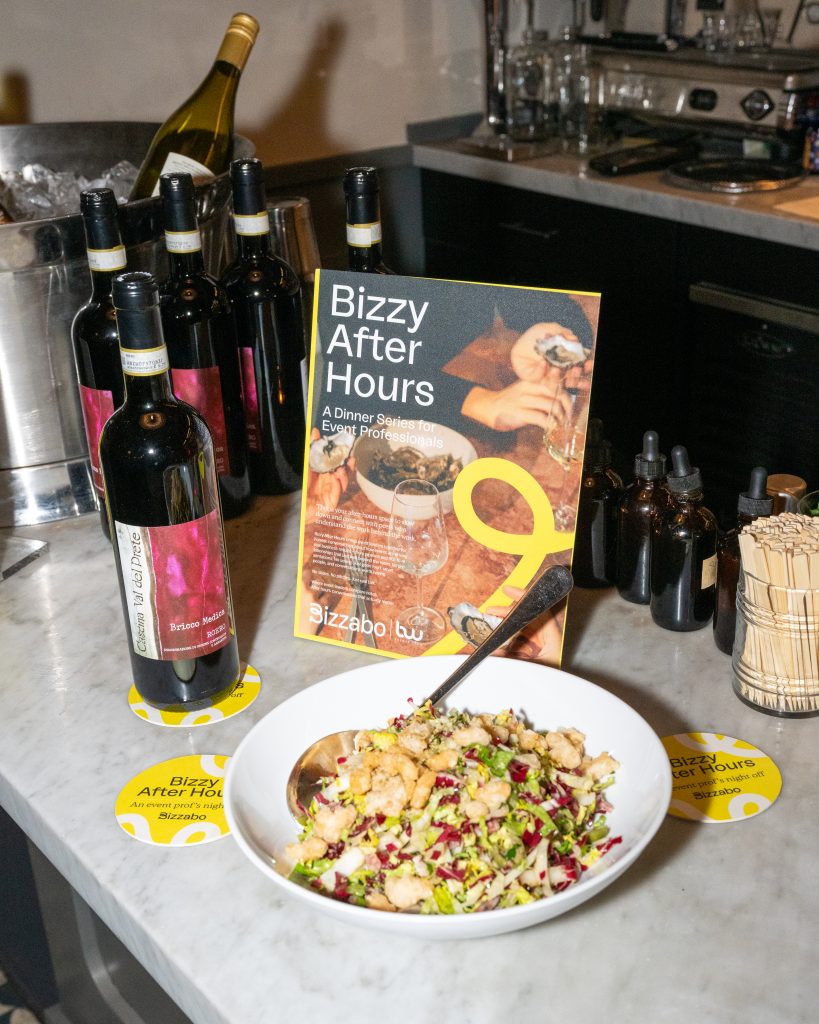
What are Bizzy Dinners?
Bizzy Dinners are Bizzabo’s curated, small-format event series designed for senior event, marketing, and experience leaders. They’re built around one core idea: better conversations drive better events.
Each dinner brings together 25–30 carefully selected peers for an intimate, multi-course experience focused on a specific industry theme. There’s no stage, no slides, and no formal presentations. Instead, the format prioritizes honest, peer-level discussion about what’s actually working, what’s not, and where event strategy is heading next.
Every dinner is hosted by a respected industry leader who helps guide the conversation. The goal isn’t to present polished answers, it’s to surface real perspectives from people actively navigating the same challenges.
This format reflects a broader shift happening across B2B events. Smaller, more intentional experiences are becoming more valuable as expectations around relevance, connection, and outcomes continue to rise. At the same time, curated formats like invite-only dinners are increasingly favored for fostering meaningful engagement over traditional large-scale environments.
In other words, Bizzy Dinners are a signal of where event strategy is going: more focused, more human, and more outcome-driven.
Events feel faster, fuller, and harder to keep up with

Across every city, one signal was impossible to miss: events feel busy.
We didn’t just hear this in conversation. We included the same question in each Bizzy Dinner registration form: “In one word, how do events feel now compared to three years ago?”, and the responses reinforced what we heard at the table.
Boston gave us ‘busy’, ‘chaotic’, and ‘rushed’.
San Francisco added ‘stretched’ and ‘complex’.
DC summed it up neatly with ‘crammed’.
This isn’t just perception. Teams are running more programs while being asked to deliver clearer results. According to our article on event marketing statistics and benchmarks for 2026, event volume is holding steady or increasing, even as expectations rise.
More events, more moving parts, more pressure to get it right.
That pace is shaping how both organizers and attendees experience events.
But underneath the chaos, there’s more intention

Here’s the shift that matters more.
Alongside all that pressure, we consistently heard words like ‘intentional’, ‘curated’, ‘personalized’, and ‘necessary’.
That combination would have been less common a few years ago.
Events have moved out of the “nice-to-have” category and into a more strategic role. As outlined in our article on event industry trends for 2026, teams are putting more thought into who attends, how experiences are designed, and what success actually looks like.
It shows up in smaller guest lists. More curated conversations. Tighter alignment with business goals.
The result is a bit of a paradox. Events feel more chaotic to run, but more intentional in how they’re designed.
The stakes are higher, and everyone knows it
Another theme that cut across cities: events feel competitive.
DC respondents described them as ‘competitive’, ‘crucial’, and ‘expensive’. Boston added ‘tough’ and ‘unsettled’.
That language points to something bigger than just budget pressure.
Events are now expected to perform. They’re measured against pipeline, revenue, and long-term impact. In many organizations, they sit alongside core growth channels, not outside them. You can see this shift reflected in our blog on event marketing strategies for enterprise events, where events are treated as part of an integrated go-to-market approach.
That raises the bar.
It also changes how success feels. A “‘good” event isn’t just well-attended or well-reviewed. It needs to drive something tangible.
Still evolving, still being figured out

For all the maturity and pressure, one word kept coming up in every city: ‘evolving’.
‘Dynamic’. ‘Adaptable’. ‘Innovative’. ‘Resilient’.
And occasionally, ‘unsettled’.
That mix says a lot about where the industry stands right now. There’s more structure and accountability than before, but no single playbook that everyone agrees on.
Even core elements like networking are still being rethought. Attendees want real connection, but creating that consistently takes design, not just good intentions.
If things feel a bit in flux, it’s because they are.
What each city revealed
While the big themes were consistent, each city had its own tone.
Boston
Boston felt intense but thoughtful.
‘Chaotic’ and ‘rushed’ came up often, but so did ‘intentional’, ‘personalized’, and ‘authentic’. There’s pressure, paired with a clear effort to make experiences more meaningful.
Washington DC
DC leaned direct and pragmatic.
‘Competitive’, ‘crucial’, and ‘expensive’ captured the reality. At the same time, ‘connected’ and ‘innovative’ showed that events are delivering value when done well.
And yes, someone described events as ‘rocking’. We’re keeping that one.
San Francisco
San Francisco reflected the full range.
‘Intentional’ and ‘impactful’ on one side. ‘Stretched’ and ‘scrutinized’ on the other. And a lot of ‘busy’ running through everything.
It’s probably the clearest snapshot of the industry as a whole.
What this means for event marketers

A few patterns stand out when you step back.
Smaller, more curated formats are becoming more valuable. When time is limited and expectations are high, people gravitate toward experiences that feel worth it.
Attendee expectations have shifted. Relevance, quality, and connection matter more than scale.
Events are also more integrated into broader strategy. As highlighted in executive perspectives on event strategy in 2026, leadership teams increasingly expect events to contribute directly to business outcomes.
And perhaps most importantly, there’s still room to experiment. The industry hasn’t settled into a fixed model, which creates space to try new formats and approaches.
Why these conversations matter
These insights come directly from the kinds of conversations we’re trying to create with Bizzy Dinners.
Small groups. The right mix of people. Space to talk honestly about what’s working and what isn’t.
No big stage. No packed agenda. Just real perspectives from people in the middle of it.
They’ve become one of the most useful ways for us to understand how event leaders are actually thinking right now.
If you want to dig deeper into some of the patterns behind these conversations, a few resources that expand on them:
Join us at a future dinner

We’re continuing to host Bizzy Dinners in more cities throughout the year.
If this sounds like your kind of conversation, join our mailing list, and we’ll let you know when we’re in your area.
It’s a simple format, but the conversations tend to stick with you long after the dinner ends.

👇Follow more 👇
👉 bdphone.com
👉 ultractivation.com
👉 trainingreferral.com
👉 shaplafood.com
👉 bangladeshi.help
👉 www.forexdhaka.com
👉 uncommunication.com
👉 ultra-sim.com
👉 forexdhaka.com
👉 ultrafxfund.com
👉 bdphoneonline.com
👉 dailyadvice.us