 By
By

Events remain a top source of professional learning. But too often, many overwhelm attendees with content that misses the mark. The result: low return rates and a growing disconnect between what organizers deliver and what attendees actually want.
According to new research from Freeman, only 27% of attendees return year after year. “Companies are spending a lot to get new attendees,” said Ken Holsinger, senior vice president of strategy at Freeman.
The findings come from Freeman’s latest trends report on learning at events, based on responses from more than 4,700 attendees, 65% of whom plan conferences and 35% who plan tradeshows, and 185 organizers.
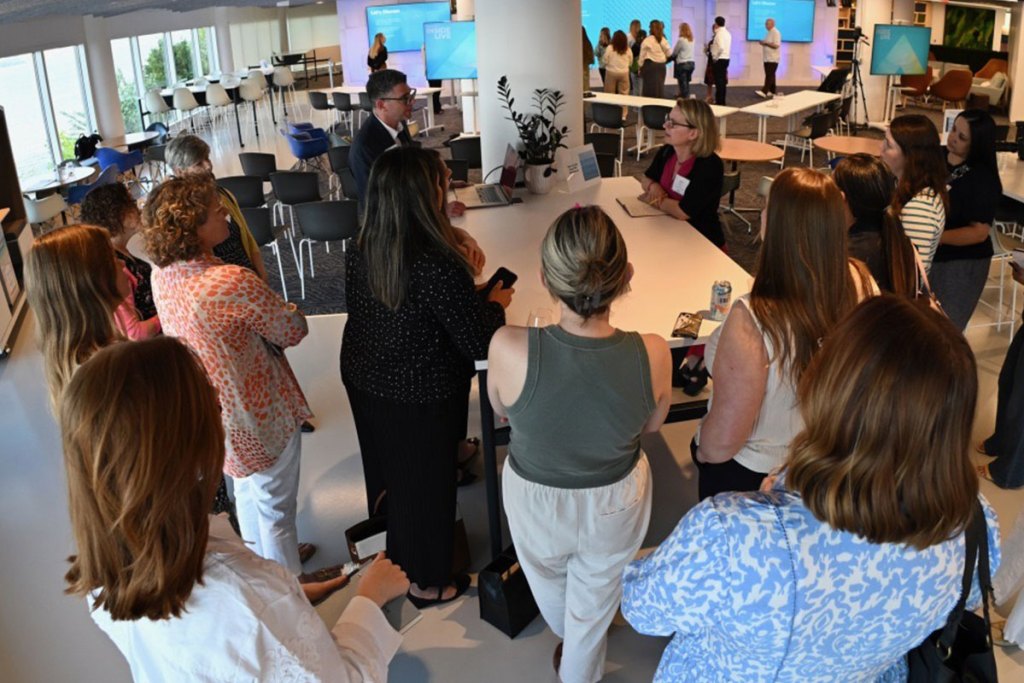
The company previewed the research this week at its Alexandria, Va. headquarters, where organizers participated in interactive sessions designed to reflect some of the report’s key themes.
Too Much Content, Too Little Value
Event organizers have long viewed content as their primary draw. But the data suggests that the strategy may be working against them.
While 83% of organizers believe content is their key differentiator, only 41% of attendees agree.
The issue isn’t a lack of programming; it’s overload. Agendas packed with hundreds of sessions are leaving attendees overwhelmed and disengaged.
“In-person events still dominate professional learning, but only if done right,” Holsinger said. “Attendees are frustrated with the quality of content and overwhelmed by the volume.”
Attendees aren’t just overwhelmed, they’re opting out. On average, approximately half of event attendees are skipping sessions, even keynotes, to take breaks, connect with others, and respond to emails.
“The focus should be on the quality of sessions, not the quantity,” said Holsinger.
For decades, continuing education credits were a primary driver of attendance, particularly for associations. That model has shifted.
Fewer than 20% of attendees now cite credits as a top reason for attending. Instead, they are looking for professional development, networking, and meaningful connections.
Online learning, accelerated during the pandemic, has made content accessible anytime, reducing the need to travel solely for education.
“They’re not coming for CEUs anymore,” Holsinger said. “That’s become a bonus, not the driver.”
Designing for How People Actually Learn
The report points to a deeper issue: Most event content isn’t designed for how people learn.
Attention naturally drops after about 10 minutes without a change in stimulus. Yet many sessions rely on long, static formats.
“People learn best when they are engaged, involved, and able to apply what they’re learning,” Holsinger said.
Even general sessions are losing traction. Organizers report that only about half of attendees choose to attend them.
By contrast, smaller, interactive formats, like the breakout groups Freeman tested during its own event, are proving more effective at driving engagement and connection.
The Rise of Curated Event Journeys
As digital platforms personalize everything from entertainment to shopping, attendees now expect the same from events.
Instead of navigating complex agendas alone, they want guidance: which sessions to attend, whom to meet, and which exhibitors are most relevant.
Recommendation engines and algorithm-driven event platforms are emerging as key tools, enabling personalized agendas, smarter networking, and real-time content suggestions.
This marks a shift from building programs to designing ecosystems.
“It’s time for events to catch up to the algorithm-based world,” Holsinger said. “We have to help attendees navigate.”
👇Follow more 👇
👉 bdphone.com
👉 ultractivation.com
👉 trainingreferral.com
👉 shaplafood.com
👉 bangladeshi.help
👉 www.forexdhaka.com
👉 uncommunication.com
👉 ultra-sim.com
👉 forexdhaka.com
👉 ultrafxfund.com
👉 bdphoneonline.com
👉 dailyadvice.us