 By
By

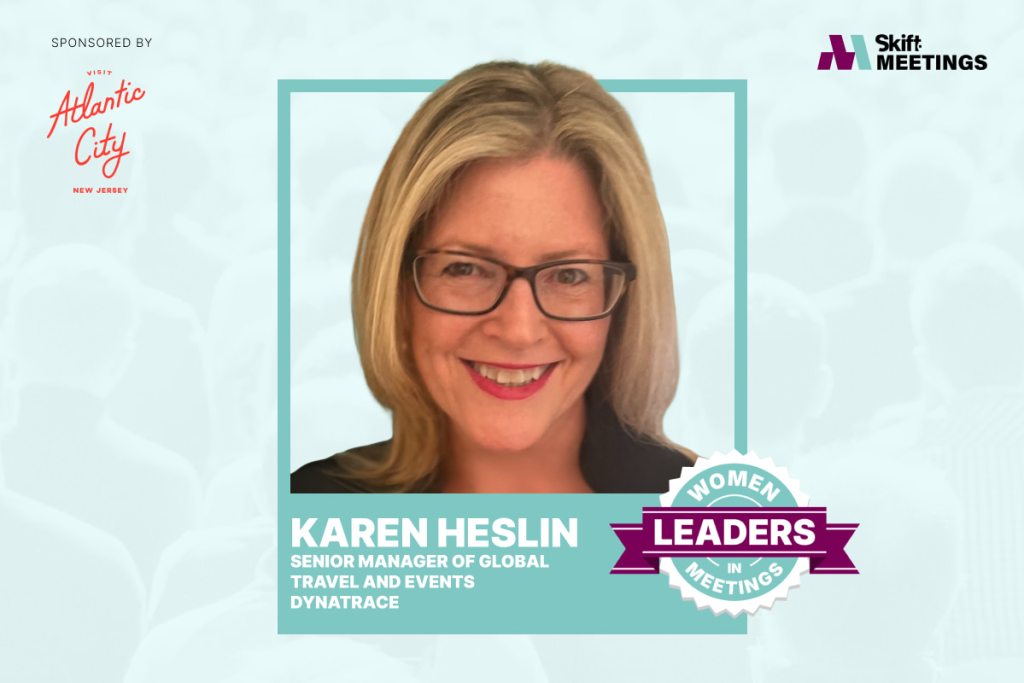
With 30 years of experience in the meetings industry, Karen Heslin has worn many hats. During her 19 years at Metlife, she advanced from a meeting planner role all the way up to director of global event management. Then it was on to a stint planning university events at Brandeis University. Now working in the technology sector as senior manager, procurement: global travel, marketing and events at Dynatrace, she is developing a comprehensive sourcing strategy for travel and meetings across 35 countries.
Heslin describes her current role as looking at her organization through the lens of automation. “What are we doing that is very task-heavy and administrative, and how can we get out of our own way? Sometimes there are just things that you do or don’t do because you’ve always done it that way. But maybe you don’t have to, and you can think more out of the box.”
She says one of her greatest strengths has been her willingness to try new things throughout her career. “I’ve taken so many leaps, and that’s probably been the most consistent thing. As what I’ve done has changed, I’ve been able to adapt and learn from each transition.”
We recently spoke with Heslin, a member of Skift Meetings’ 2026 Advisory Council, about how her leadership style has evolved as her career has progressed — as well as about how some things never change.
What qualities make a good leader?
The first one that comes to mind is to be a good listener. That’s not always an easy thing when you’re a Type A personality, and you’re trying to drive things and get things done. But I do think it’s important to take a breath and listen to your stakeholders, your direct reports, and your vendors.
Leaders should never stop asking questions. A lot of us have been doing this a long time, and we have a lot of knowledge. But there’s always more to learn, and things are always evolving.
So it’s important to just listen and ask questions of your peers and also of other people who haven’t been doing this for years. What do they think?
If you stop doing that, you’re in trouble — you start thinking you’re smarter than everyone else.
What is your advice to aspiring leaders?
Embrace everything new that you get the chance to try. It may be hard if you’re stuck in your ways a little bit, but none of us are really stuck — and as an event planner, you can’t be.
Embrace AI. Don’t be afraid of it. Don’t think it’s going to take our jobs, that’s not true. Instead, think about how you can use it. The more you understand it and know how to leverage it, the better off you’re going to be.
Reach out to people you know and find yourself a mentor. It doesn’t even have to be someone in your field; it could be someone outside of work. But find someone who you admire and see if you can have lunch with them once every quarter. Because you don’t always end up working for that one manager who’s going to give you your big break.
Advocate for yourself. Have goals and objectives. And don’t be afraid to have a voice and ask for what you want.
Someone I used to work for told me to always speak up for myself. You have a voice. You have to be able to say, “Look what I did,” because your leader doesn’t necessarily know, or they have other things that they’re focused on. And always measure it, and show the impact it had.
I think I’ve gotten a little better at that. However, my leadership style is very collaborative; I like to get people on board and work together.
What is one leadership lesson you have learned over time?
How you choose to treat people impacts how hard they’re going to work for you and what they’re going to do for you. Are they going to go above and beyond? It’s very nuanced, and it could make a break an event.
For example, you have to give vendors the tools they need to succeed, and you have to treat them as partners. In what we do, partnerships are everything.
But if you need a hotel to do something that maybe wasn’t in the contract in black and white, and that they don’t have to do, they’re only going to do it if you have a relationship with them. Or maybe if you’ve done something that you didn’t have to do and helped them in some way.
Many times in this industry what we do is transactional, “one and done” — like working with someone at a restaurant you’re probably only using once. You end up dealing with people who are junior and might not be getting paid a ton of money. They’re doing it because they love it. It’s always important to treat them — and everyone — with respect.
👇Follow more 👇
👉 bdphone.com
👉 ultractivation.com
👉 trainingreferral.com
👉 shaplafood.com
👉 bangladeshi.help
👉 www.forexdhaka.com
👉 uncommunication.com
👉 ultra-sim.com
👉 forexdhaka.com
👉 ultrafxfund.com
👉 bdphoneonline.com
👉 dailyadvice.us